String Wound Filter vs Polypropylene: A Cartridge Selection Guide
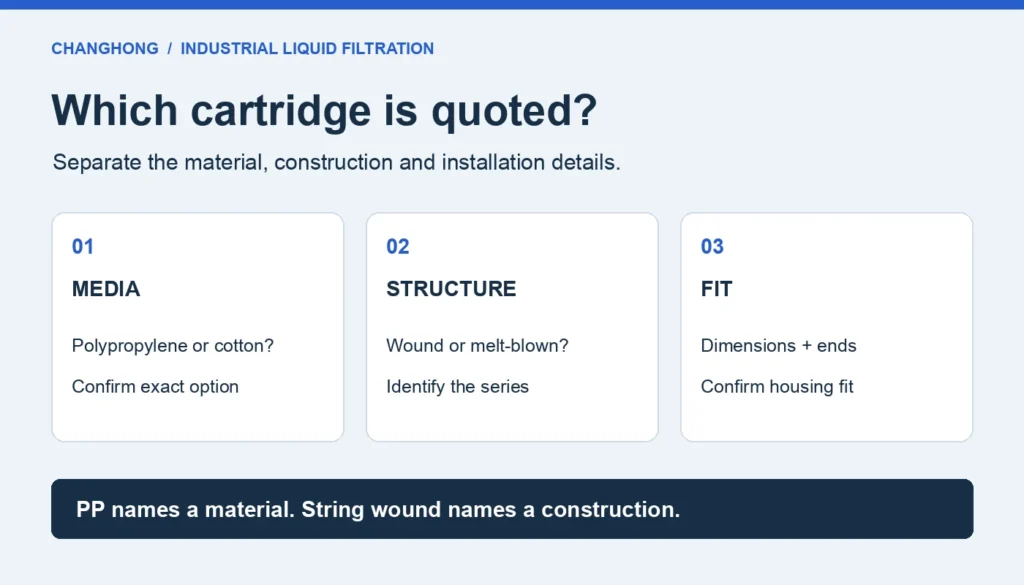
A string wound filter vs polypropylene comparison starts with a naming problem: string wound describes how a cartridge is constructed, while polypropylene, or PP, describes a material. A string-wound cartridge can itself use polypropylene yarn. Before comparing quotations, identify whether the alternative is a melt-blown PP cartridge, a pleated PP element, or another construction.
For industrial liquid filtration, the useful comparison is between two specified cartridges in the same duty. This guide explains how to turn an unclear “wound or PP?” request into a quotation that can be reviewed. If you have not yet chosen between bags and cartridges, use the bag and cartridge buying guide first.
Identify the construction on each quotation
A string-wound element uses yarn wrapped around a supporting core. A melt-blown element uses a fibrous structure formed through the melt-blowing process. Those descriptions help identify the product; they do not establish a universal winner for service life, pressure drop or removal efficiency.
Ask the supplier to fill in separate entries for media material, construction and core. “Polypropylene cartridge” is incomplete because it leaves the construction unspecified. Likewise, “string wound” does not identify the yarn or core material.
| Entry on an offer | What still needs confirmation |
|---|---|
| PP filter cartridge | Whether the element is wound, melt-blown, pleated or another construction. |
| String-wound cartridge | The yarn, core, dimensions, end arrangement and rating basis. |
| Melt-blown cartridge | The specific series, media, core configuration and connection details. |
| Same length and micron rating | Physical fit, documented filtration performance and operating limits. |
Separate the available series and their options
CHANGHONG’s XPP string-wound cartridges list polypropylene yarn and cotton ordering options, with polypropylene or 304 stainless steel cores. Published outer diameters are 63 and 115 mm. These are selection options; the required combination still needs confirmation for the actual liquid and installation.
The RPP/RJP polypropylene cartridge range distinguishes RPP melt-blown construction from RJP melt-blown wrapped construction. Do not carry a surface, core or connection option from one series onto the other without confirmation.
A request for PP media therefore does not eliminate the wound option. Conversely, a preference for a wound structure does not mean cotton is automatically suitable for the fluid. Keep the material decision and the construction decision visible in the specification.
Check housing fit before treating a cartridge as a replacement
Use the existing element and housing documents to record the overall length, outer and inner diameters, end arrangement and sealing details. Photograph both ends of the removed element when drawings are unavailable. A photograph can help identify an arrangement, but it should not substitute for measurements or a confirmed configuration.
A nominal length alone is insufficient. For example, both product ranges list 9.75-inch and 10-inch options. Treat those as separate listed sizes until the housing requirements establish which is appropriate. Do not assume that similar appearance or a shared nominal size proves interchangeability.
Request a written fit confirmation against the supplied dimensions and housing information before purchasing replacements. The selection checklist provides a place to organize the fluid, duty and installation details.
Compare performance under the stated conditions
Ask both suppliers for the meaning of the quoted rating, the supporting test information and the conditions covered by their data. A shared micron number is not enough to show equivalent retention. Keep any performance claim attached to the exact cartridge being quoted.
For a flow comparison, state the liquid, temperature and required flow, and request the corresponding pressure-drop information. For operating limits, ask about the complete element, including its core and end components. Do not transfer a temperature or pressure limit from one material name to every cartridge that uses it.
If a supplier proposes a replacement trial, agree on the acceptance criteria before installation. Record the candidate configuration and the process conditions, then assess the required downstream result and operating behavior. A claim of longer life is not a purchasing basis unless the comparison uses a defined duty and a clear endpoint.
Send a comparison request that suppliers can answer
A useful request contains the existing part reference if known, photographs or dimensions, liquid and operating conditions, required rating and quantity. Add the problem prompting the change: uncertain fit, an unclear specification, an operating issue, or a request to evaluate another construction.
For example: “Please compare a PP-yarn wound cartridge and a PP melt-blown cartridge for the attached housing and duty. Identify each proposed configuration, confirm fit, and provide the rating basis and applicable operating limits.” This is an example inquiry, not a claim that either configuration suits an unspecified process.
Keep the supplier’s answers in a side-by-side record. Mark missing information as pending and resolve it before approving the replacement. Use the technical resources to organize documentation requests, or send the existing cartridge details for selection support.